
Introduction
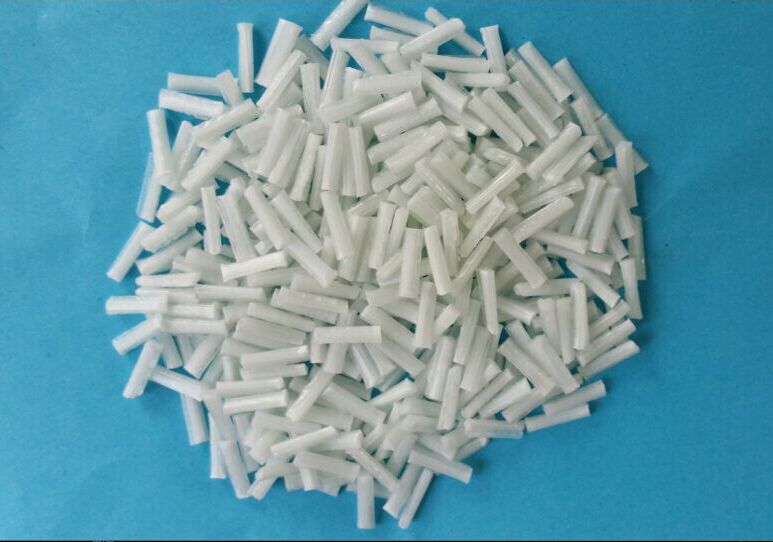
In the modified plastics industry, glass fiber (GF) is one of the most mature and widely used reinforcing materials. It serves as the core solution to improve rigidity, strength and dimensional stability in engineering plastic systems such as PP, PA and PBT, as well as in end-use markets including automotive, home appliances and electrical & electronics.
In practical applications, however, most professionals only understand glass fiber at a basic level — long fibers are stronger, short fibers are easier to process — while overlooking critical variables: fiber diameter, alkali content, length retention rate and interfacial bonding efficiency. These factors do not act independently; their interactions determine the final performance of the composite material.
More importantly, these effects are supported by clear data and experiments, not just empirical rules. This article systematically classifies glass fiber types, combines typical data ranges, and fully explains the performance impact mechanisms.
1. Material Nature of Glass Fiber: Reinforcement Mechanism and Performance Boundaries
Glass fiber is produced by melting silicate raw materials at 1,400–1,600°C and drawing into filaments, with a typical monofilament diameter of 5–20 μm. Unlike bulk glass, the fibrous form enables effective stress bearing.
For standard E-glass fiber, the typical mechanical properties are:
- Tensile strength: 2,000–3,500 MPa
- Elastic modulus: 70–76 GPa
- Density: 2.5 g/cm³
While its strength is lower than carbon fiber (typically >4,000 MPa), glass fiber offers a clear cost-performance advantage at 1/5 or less of the cost of carbon fiber. Its dominance in large-scale industrial applications stems from a balanced tradeoff between performance and cost, not absolute performance superiority.
Reinforcement in composites depends on load transfer efficiency. Studies confirm that with good interfacial bonding, glass fiber reinforced plastics (GFRP) can achieve a 50%–200% increase in tensile strength and a 2–4× boost in elastic modulus compared to neat resin — the core reason for its widespread adoption.
2. Fiber Diameter: Systematic Impact on Strength and Interfacial Effects
Fiber diameter is an underrated yet critical parameter in glass fiber performance.
Monofilament test data shows a clear correlation between diameter and strength:
- 12–13 μm diameter: Tensile strength ≈ 1,000–1,500 MPa
- 5–7 μm diameter: Tensile strength rises to 2,000–2,500 MPa or higher
This difference is tied to internal defect distribution. Thicker fibers are more likely to contain microcracks or inhomogeneities, which act as fracture initiation sites under load. Finer fibers have a smaller volume and lower defect probability, resulting in higher ultimate strength.
In composites, diameter affects more than just strength — it drives interfacial effects. Reducing diameter from 12 μm to 6 μm nearly doubles the specific surface area, expanding the resin-fiber contact interface at the same fiber loading. This larger interface distributes stress more uniformly at the microscale and improves overall load transfer efficiency.
This advantage is not unconditional. Finer fibers are harder for resin to wet out. In practice, high resin viscosity or insufficient processing can cause local unwetted areas, creating microvoids or interfacial defects that trigger long-term performance degradation.
Diameter also affects length retention rate during processing. Finer fibers are more prone to shear fracture in high-shear processes like injection molding. For example, chopped fiber with an initial length of 3 mm may reduce to an average length of 0.2–0.5 mm after molding, with finer fibers showing a higher breakage ratio. Superior initial properties can be lost if degradation during processing is severe.
From an engineering perspective, diameter selection is a multi-objective optimization that balances strength gain, interfacial performance and processing stability.
3. Alkali Content: Key Parameter from Chemical Composition to Long-Term Durability
Alkali content is the core index governing the chemical stability of glass fiber, with impacts mostly seen in long-term performance rather than initial properties.
Alkali metal oxides (Na₂O, K₂O) disrupt the silicate network, loosening the glass structure. Higher alkali content accelerates dissolution in water and chemical environments, especially over extended service life.
E-glass (alkali-free glass fiber), the industry standard, has an alkali content <0.5% and significantly lower mass loss in water than medium-alkali glass fiber. Tests confirm that medium-alkali fiber has lower strength retention than E-glass under identical temperature and immersion conditions — one reason it is rarely used for structural reinforcement.
Medium-alkali fiber performs better in acidic environments, with extensive use in chemical corrosion-resistant applications such as acid storage tanks and pipes.
High-alkali glass fiber (alkali content >12%) is nearly unused as a reinforcement in modern engineering plastics. With tensile strength <1,000 MPa and severe performance degradation in humid or high-temperature environments, it is limited to non-structural, low-demand applications.
While alkali content has little short-term effect on test results, differences become pronounced in long-term aging and hydrothermal testing. Ignoring this factor often leads to acceptable initial performance but premature failure in service.
4. Fiber Length: Discrepancy Between Lab Data and Engineering Reality
A common misconception: Shorter fibers have higher strength. This holds true for single-fiber testing:
- 5 mm fiber length: Tensile strength ≈ 1,500 MPa
- 90 mm fiber length: Tensile strength drops to ≈ 700–800 MPa
This is a statistical effect: longer fibers have a higher probability of containing internal defects, lowering average strength.
This rule does not directly apply to composites. Real-world performance depends on whether fibers effectively bear load, which relies on the critical length concept. Only when fiber length exceeds the critical length can interfacial shear stress fully transfer external load to the fiber for effective reinforcement.
For common thermoplastic systems, critical length is typically 0.2–1 mm (depending on interfacial strength and fiber diameter). Fibers shorter than this threshold cannot boost performance effectively, even with high single-fiber strength.
In production, chopped short fibers (initial length 3–6 mm) usually retain an effective length of 0.3–0.8 mm after injection molding — near or slightly above the critical length, balancing performance and processability.
Long fibers (e.g., LFT systems, 10–25 mm initial length) maintain millimeter-scale or longer structures after processing, delivering significantly better impact resistance than short fiber systems. Test data shows that at equal fiber loading, long fiber reinforced materials achieve a 30%–100% higher impact strength than short fiber counterparts, although tensile strength gains are not always proportional.
Engineeringly, length is not about the longer the better — it is about retaining effective reinforcing length after processing.
5. Chemical Stability and Temperature Effects: Engineering Risks Behind Data
While glass fiber is considered corrosion-resistant, its stability has clear boundary conditions.
At room temperature, glass fiber is stable against most organic solvents and water — a key enabler of its industrial use. However, it undergoes irreversible structural dissolution in hydrofluoric acid and strong alkalis.
Temperature accelerates these reactions. Below 100°C, corrosion follows an Arrhenius-like trend: reaction rate roughly doubles with every 10°C temperature rise. Corrosion rates can differ by multiples at 60°C vs. 90°C even in the same chemical medium.
This is critical in engineering. For example, components in automotive engine bays or electrical equipment operate long-term at 70–120°C; moisture or chemical exposure can gradually degrade the fiber-matrix interface and reduce performance.
For long-term or high-temperature applications, relying solely on initial mechanical data is insufficient. Aging testing and environmental suitability evaluation are mandatory.
Key Takeaways
The performance of glass fiber in modified plastics results from synergistic interactions of multiple parameters, not a single variable. Diameter affects strength and interfacial bonding; length governs load transfer efficiency; alkali content determines long-term stability. All factors must be validated against real-world application scenarios.
Data shows inherent tradeoffs: finer fibers improve strength but may hurt processing stability; long fibers enhance impact resistance but demand stricter processing. In engineering design, the optimal parameter set must be matched to the application environment.
Data Sources
Data is compiled from the following public materials and industry literature:
- ASM Handbook: Composites
- ASTM D578 / ISO 2078 standards
- Hull & Clyne, An Introduction to Composite Materials
- Mallick, Fiber-Reinforced Composites
- Saechtling Plastics Handbook
- Technical datasheets from BASF, DuPont, Owens Corning and other material manufacturers

