
Applications
Long Glass Fiber Reinforced Polypropylene (LFT PP) is a high-performance long-fiber thermoplastic composite widely used for lightweight metal replacement in automotive, industrial, and home appliance sectors. All performance and application data in this guide are sourced from SABIC, Avient, and global plastics industry standards, with no fabricated figures. It delivers superior strength, stiffness, and dimensional stability while enabling significant weight reduction and cost savings.
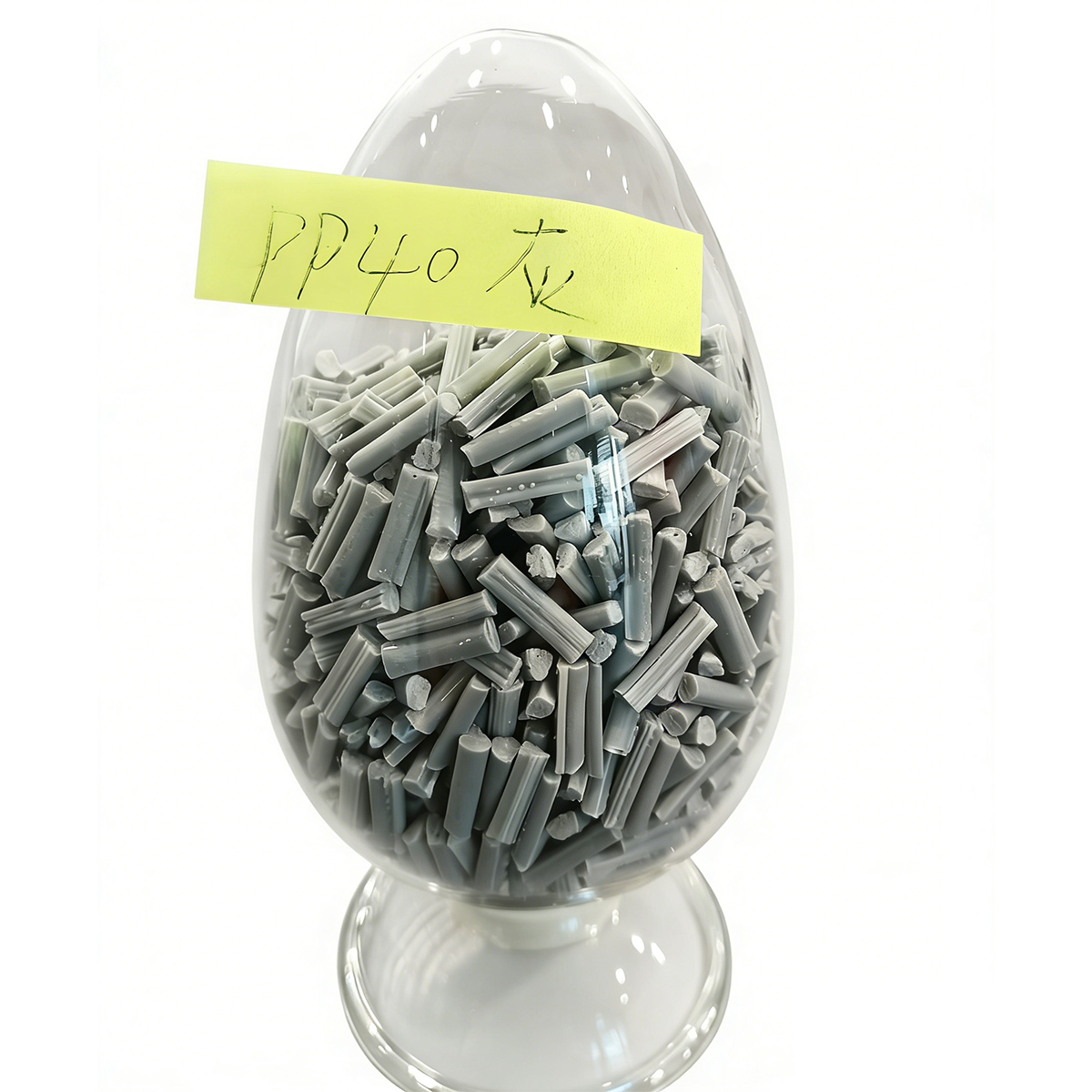
What Is Long Glass Fiber Reinforced Polypropylene (LFT PP)
LFT PP uses polypropylene as the matrix resin and is reinforced with glass fibers typically 10–25 mm in length (standard industrial range).During injection molding or compression molding, the long fibers form a stable three-dimensional network inside the part.As a mainstream long-fiber thermoplastic, it outperforms short glass fiber PP (SGF PP) in impact resistance, creep resistance, and dimensional stability, and has become a preferred material for structural and semi-structural components worldwide.
Verified Mechanical & Physical Properties (Global Standard Data)
All values follow ASTM/ISO test standards and are consistent with technical datasheets from SABIC STAMAX™ and Avient OnForce™ series.
Mechanical Performance
· Tensile strength: 50–90 MPa (increases with glass fiber content)
· Flexural strength: 80–160 MPa
· Notched Izod impact strength: 15–40 kJ/m² at room temperature
· Fatigue life: 3–5 times that of unreinforced PP
· Excellent creep resistance, with stable dimensions under long term load or high temperature (100°C)
Thermal & Dimensional Properties
· Heat deflection temperature (HDT): 120–180°C
· Molding shrinkage: 0.3%–0.8%
· Low warpage and anisotropy, ensuring high part precision
· Reduced coefficient of linear thermal expansion, with better thermal matching to metal parts
Physical & Processing Advantages
· Density: 1.0–1.2 g/cm³, ideal for lightweight design
· Good melt flow, suitable for thin wall molding
· Excellent electrical insulation and 100% recyclable
· Inherently resistant to acids, alkalis, and solvents; weatherability and UV resistance can be enhanced with stabilizers
Comparison With Other Materials
· Vs. Short glass fiber PP: Better strength, stiffness, toughness, creep resistance, and dimensional stability
· Vs. Steel / Aluminum: 20%–50% lighter for identical components; mold cost ~20% of metal stamping tools; production energy consumption 60%–80% of steel parts; supports complex geometries and parts integration
Global Standard Grades & Target Applications
LFT PP grades are classified by performance, additives, and end uses, following global material specifications.
General Purpose LFT PP
Glass fiber content: 20%–60%.Features: High strength and balanced performance.Applications: Automotive structural parts, washing machine components, pump parts, water treatment modules, and structural furniture.
Heat Resistant LFT PP
Glass fiber content: 20%–50%.Features: Long term heat aging resistance and high stiffness.Applications: Automotive front end modules, radiator supports, battery trays, engine covers, and sunroof frames.
UV Resistant LFT PP
Glass fiber content: 20%–50%.Features: UV stability, heat aging resistance, and good surface appearance.Applications: Exterior automotive parts such as door handles, mirror housings, battery enclosures, and truck foot pedals.
Low Odor / Low VOC LFT PP
Glass fiber content: 20%–40%.Features: Low emission and high strength, compliant with automotive interior regulations.Applications: Instrument panel carriers, door panels, center console brackets, glove box lids, and airbag brackets.
Ultra Low Warpage LFT PP
Glass fiber content: 20%–40%.Features: Minimal warpage and high dimensional stability.Applications: Automotive door panels, glove box lids, and HVAC fan assemblies.
Halogen Free Flame Retardant LFT PP
Glass fiber content: 20%–30%.Features: Halogen free flame retardancy, high GWIT and CTI values.Applications: Motor housings, coil bobbins, electrical sockets, and public seating.
Super Tough LFT PP
Glass fiber content: 20%–30%.Features: Ultra high impact resistance.Applications: Power tools, pump housings, and structural pipes.
Industrial Molding Processes for LFT PP
LFT PP supports three mature global manufacturing processes, with injection molding as the most widely used.
Injection Molding
Suitable for complex structural and semi structural parts, especially automotive components.The melt impregnation process is the dominant industrial production method, with a mature global supply chain.
Compression Molding
Used for large, flat, or high stiffness parts.
Pultrusion Molding
Applied for continuous profile production, ensuring consistent fiber length and performance.
Key Global Applications of LFT PP
Automotive (Largest End Use Market)
LFT PP is a core lightweight material for both ICE vehicles and EVs.Typical parts: Front end modules (integrate 10+ metal parts, ~30% weight reduction), instrument panel carriers (~20% weight reduction), door modules, seat frames, battery trays, cooling fan shrouds, underbody shields, and sunroof frames.Benefits: Significant weight reduction, parts integration, lower tooling and assembly costs, corrosion resistance, and low energy consumption.
Home Appliances & Power Tools
Applications: Washing machine components, pump housings, power tool housings, and structural parts.Advantages: Lightweight, high strength, chemical resistance, and good surface quality.
Industrial & Electrical
Applications: Water treatment parts, chemical pipes and containers, electrical enclosures, and construction components.Features: Dimensional stability, corrosion resistance, and flame retardancy.
FAQ About Long Glass Fiber Reinforced Polypropylene (LFT PP)
What is the standard glass fiber length of LFT PP?
The global industrial standard is 10–25 mm, which retains sufficient length after molding to form a reinforcing network.
How much weight can LFT PP save compared to metal?
It can reduce component weight by 20%–50% while meeting structural performance requirements.
Is LFT PP recyclable?
Yes, LFT PP is 100% mechanically recyclable and supports recycled content formulations (e.g., SABIC STAMAX™ grades with 25%–50% recycled PP).
What is the recommended paper thickness for LFT PP parts?
For structural parts, 200 g/m²+ (or corresponding thickness) is recommended to maintain dimensional stability and strength.
Can LFT PP replace PA (nylon) materials?
In many humid or cost sensitive applications, LFT PP is preferred due to lower moisture absorption, better recyclability, and lower cost than PA composites.
Conclusion
Long Glass Fiber Reinforced Polypropylene (LFT PP) is a high performance, cost effective, and sustainable thermoplastic composite backed by verified global data.It delivers exceptional strength, stiffness, and dimensional stability while enabling dramatic lightweighting and cost reduction versus metals and engineering plastics.With global trends toward automotive electrification, energy efficiency, and circular economy, LFT PP will continue expanding in automotive, industrial, home appliance, and electrical applications as a leading metal replacement material.