
The global lightweighting megatrend keeps advancing, prompting automakers and component suppliers to continuously raise their material selection standards.
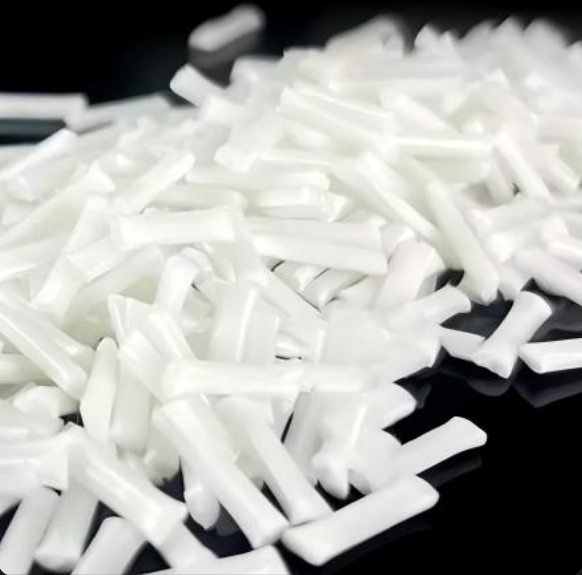
Long Glass Fiber Reinforced Polypropylene (LGF-PP) features low density, high rigidity, excellent low-temperature resistance and outstanding molding stability. Gradually replacing conventional metals and short-fiber plastics, it has become one of the most sought-after modified materials in the global automotive industry.
Compared with metals, LGF-PP delivers a 30%–50% weight reduction. Its impact resistance and creep resistance are over 40% higher than those of short glass fiber PP (tested in accordance with ISO 179 or ASTM D256 standards).
A Modification Manufacturer with 20 Years of Expertise
We are an original manufacturer specializing in the R&D and mass production of long glass fiber reinforced PP and PA66, with more than 20 years of experience in formula optimization and mass production process refinement. Multiple grades including LGF-PP10, LGF-PP20, LGF-PP30, LGF-PP40 and LGF-PP50 are exported in bulk to Europe, Southeast Asia and the Middle East.
These materials are applied to core component projects such as suspension tie rod bases, engine decorative covers, automotive sunroof rails and door inner frames.
Grade Selection Reference
· LGF-PP20–30: Suitable for decorative parts and lightly loaded components (e.g. decorative covers)
· LGF-PP30–40: Suitable for structural parts (e.g. sunroof rails)
· LGF-PP40–50: For high-rigidity metal replacement components (e.g. tie rod bases)
Advantages & Processing Guidelines of Continuous Long Glass Fiber Technology
Unlike traditional short glass fiber PP, our factory adopts a continuous long glass fiber impregnation and coating process to achieve continuous oriented arrangement of glass fibers within the polymer matrix. Third-party testing verifies that the material’s creep resistance and impact resistance are over 40% superior to ordinary short glass fiber PP.
The material resists warpage under alternating high and low temperature cycles, meeting stringent test requirements for passenger and commercial vehicle parts.
Vehicle fitting verification: The warpage rate of long-size components such as sunroof rails is reduced by approximately 30% versus short-fiber alternatives.
Processing Precautions
LGF-PP is sensitive to injection molding parameters. Low pressure & low injection speed and wide gate designs are recommended. High-compression-ratio screws should be avoided to prevent excessive shear fracture of glass fibers. Our team can support customers with mold flow analysis and provide initial process parameter recommendations.
Custom Formulas Adapted to Diverse Overseas Climates
We develop custom formulas featuring weather resistance, low VOC, oil resistance, flame retardancy and other special properties tailored to different overseas driving environments. LGF-PP faces drastically different performance demands across climate zones; direct use of general-purpose grades may lead to on-site product failure.
For high-altitude Northern European markets, we developed a low-temperature toughened LGF-PP grade that avoids brittle cracking at -40°C. After 1,000 hours of aging testing at -40°C, it retains ≥85% of its impact strength.
We also optimized hydrolysis-resistant formulas for hot and humid Southeast Asian climates, enabling long-term service life for tropical automotive accessories. After 1,000 hours of aging under 85°C / 85% RH conditions, the hydrolysis-resistant grade maintains over 80% of its flexural strength.
Full-Range Production Control & Export Certifications
Our facility is equipped with fully automatic large-scale extrusion production lines, enabling independent full-process control from raw material modification and pelletization to performance testing.
Every batch of products holds complete export certifications including SGS, RoHS and REACH, complying with environmental standards for the EU and North America.
Compared with European and American brands (e.g. SABIC, LyondellBasell), our equivalent-grade LGF-PP is 20%–30% lower in ton price, while delivering 90%–95% of their key mechanical performance. In addition, we offer shorter lead times (15–20 days for standard orders) and overseas technical support.
Accelerated Localization: Verification Process for Overseas Clients
Driven by accelerated localization of global auto parts manufacturing, an increasing number of overseas auto component factories are shifting from costly European and American raw materials to domestic long glass fiber PP.
Typical verification cycle: Approximately 3 months from initial sample submission to bulk order placement.
1. We first supply 500–1000 kg of samples for customers to conduct mold flow analysis and bench testing.
2. Upon qualification confirmation, full-container shipments commence.
We recommend customers test batch stability during the verification phase; we can provide mechanical performance reports across three consecutive production batches for reference.
Backed by a mature land and sea transportation network, we continuously supply overseas samples and custom formula services. We reliably deliver small-batch trial samples and full-container bulk export goods. With cost-effective modified raw materials, we create pathways for Chinese modified plastics to enter the global automotive component industrial chain.
Future Development Direction: New Energy Vehicle Battery Brackets & Charging Pile Housings
The factory will further increase investment in R&D of lightweight new materials, while expanding the application scope of long glass fiber modified materials in new energy vehicle battery brackets and charging pile housings.
New energy vehicles impose new material requirements: flame retardancy (UL94 V-0), electrolyte resistance and long-term thermal aging resistance. We are currently focusing on halogen-free flame-retardant LGF-PP development, targeting a V-0 flame retardant rating at 1.6 mm thickness.
We will keep pace with the development trend of the global new energy vehicle industry and continuously advance lightweighting across global automotive components.